Rosa Vogel · 15 September 2026
Decoding Audience Retention Patterns in Non-Commercial Web Spaces
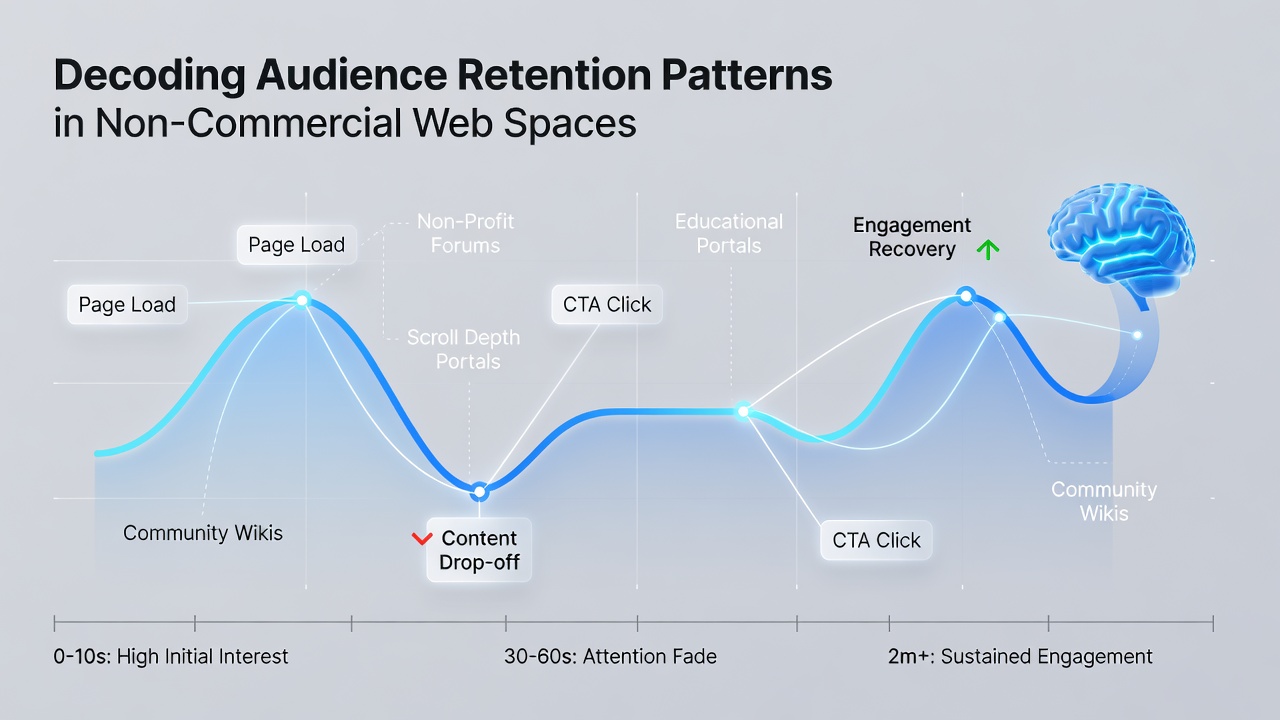
Non-commercial web spaces such as educational repositories, open-source documentation sites, and community-driven wikis rely on retention metrics that differ from those in profit-oriented platforms, and researchers track these through aggregated server logs, heat mapping tools, and anonymized user flow data. Session length, page depth, and return frequency serve as core indicators where content focuses on information sharing rather than transactions, while patterns emerge when visitors navigate through interconnected resources without external prompts like advertisements or prompts to subscribe.
Core Metrics in Retention Analysis
Data from multiple studies shows that bounce rates in non-commercial domains average lower than commercial counterparts when content addresses specific queries with depth, yet repeat visits depend heavily on update cadence and cross-linking quality. Observers note that time-on-page distributions often cluster around technical tutorials or archival materials, with peaks occurring during academic cycles such as back-to-school periods in September 2026 when students and researchers seek reference materials. External navigation paths frequently lead back to these spaces through search engines or forum citations, creating loops that sustain engagement without paid acquisition channels.
Behavioral Patterns Across Site Types
Community forums and hobbyist archives display distinct retention curves compared with government information portals, and one study revealed that users on the former spend extended periods exploring threaded discussions before departing whereas the latter sees shorter, task-oriented visits followed by direct returns for updates. Researchers discovered correlations between content freshness and loyalty signals, where sites posting quarterly revisions retain higher percentages of monthly active visitors than static counterparts. Those who've examined navigation heatmaps find that sidebar resource lists and internal search functions guide users deeper into site structures, reducing exit points at early stages of the journey.
Tools and Data Sources for Pattern Identification
Analytics platforms adapted for non-profit environments aggregate anonymized signals from open web crawls and voluntary site embeds, allowing patterns to surface across geographic regions without centralized ownership. According to reports compiled by Statistics Canada on digital information access, public sector sites exhibit steady retention when users bookmark or integrate materials into personal workflows, and similar trends appear in EU digital single market assessments that track cross-border educational resource usage. University-led research papers further break down these flows by segmenting cohorts such as students versus independent learners, revealing that mobile access patterns shift retention windows toward evening hours in several tested populations.
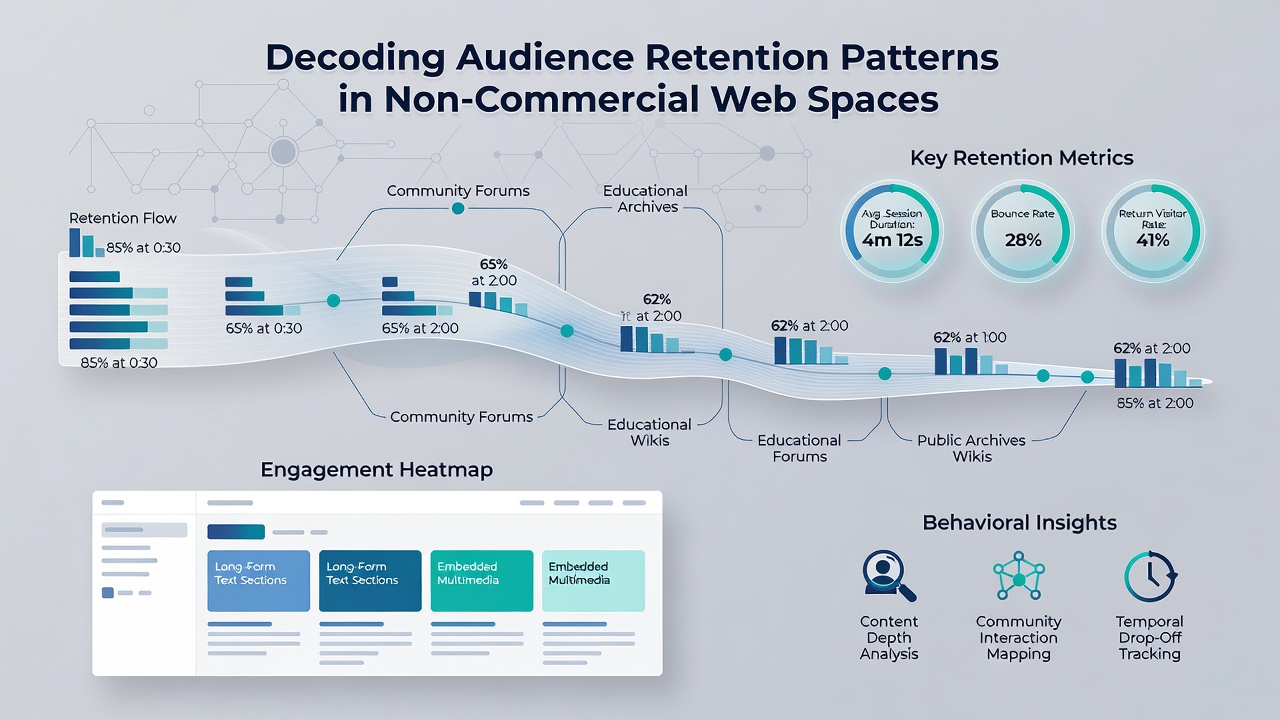
What's interesting here is how seasonal events influence these metrics, with September 2026 data indicating spikes in retention around policy update releases or new research publications hosted on institutional domains. External links from academic indexes or library catalogs feed additional traffic that converts into deeper engagement when landing pages match user intent precisely, and figures from the Australian Bureau of Statistics on online information seeking confirm that government-hosted datasets maintain consistent return rates among professional researchers who revisit for verification purposes.
Segment-Specific Retention Dynamics
Independent hobby sites and volunteer-maintained archives often see retention tied to community contribution features, where registered users return to edit or comment at rates exceeding casual browsers by measurable margins. Data indicates that embedding interactive elements such as annotation tools or version histories extends dwell time without commercial incentives, while straightforward text archives rely on search engine optimization and external citations for ongoing discovery. Observers note that geographic factors play a role, with North American users showing different repeat-visit intervals than European counterparts due to time zone alignments with content update schedules.
Academic repositories demonstrate strong loyalty when materials align with curriculum changes, and one analysis found that PDF downloads followed by return visits within 30 days correlate with higher overall engagement scores. Those studying these spaces find that long-form reference pages outperform short updates in sustaining attention, although navigation aids like table-of-contents anchors help users progress without friction.
Conclusion
Retention patterns in non-commercial web spaces emerge from the interplay of content utility, structural navigation, and external discovery pathways, with measurable data revealing consistent behaviors across site categories. Researchers continue to refine measurement approaches as web technologies evolve, providing clearer pictures of how audiences interact with freely available resources over extended periods. The evidence points to ongoing opportunities for site operators to adjust based on these documented flows rather than assumptions.